Stiffness creeps up on people: a neck that will not turn as far, a back that protests at bending, shoulders and hips that feel tight and reluctant. It is one of the most common things we see, at every age, and it responds well to the right help.
You might notice it first thing in the morning, after sitting, or when you try something you have not done for a while: reaching a high shelf, checking a blind spot, getting down to the floor and up again. Restriction like this usually means muscles and joints have tightened, become guarded, or simply lost the habit of moving through their full range. Often the nervous system itself has become hyper-vigilant and guards the body, holding it in postural restriction long after the original problem has passed. It is rarely permanent, and it usually improves once the body is shown, gently and repeatedly, that the movement is safe.
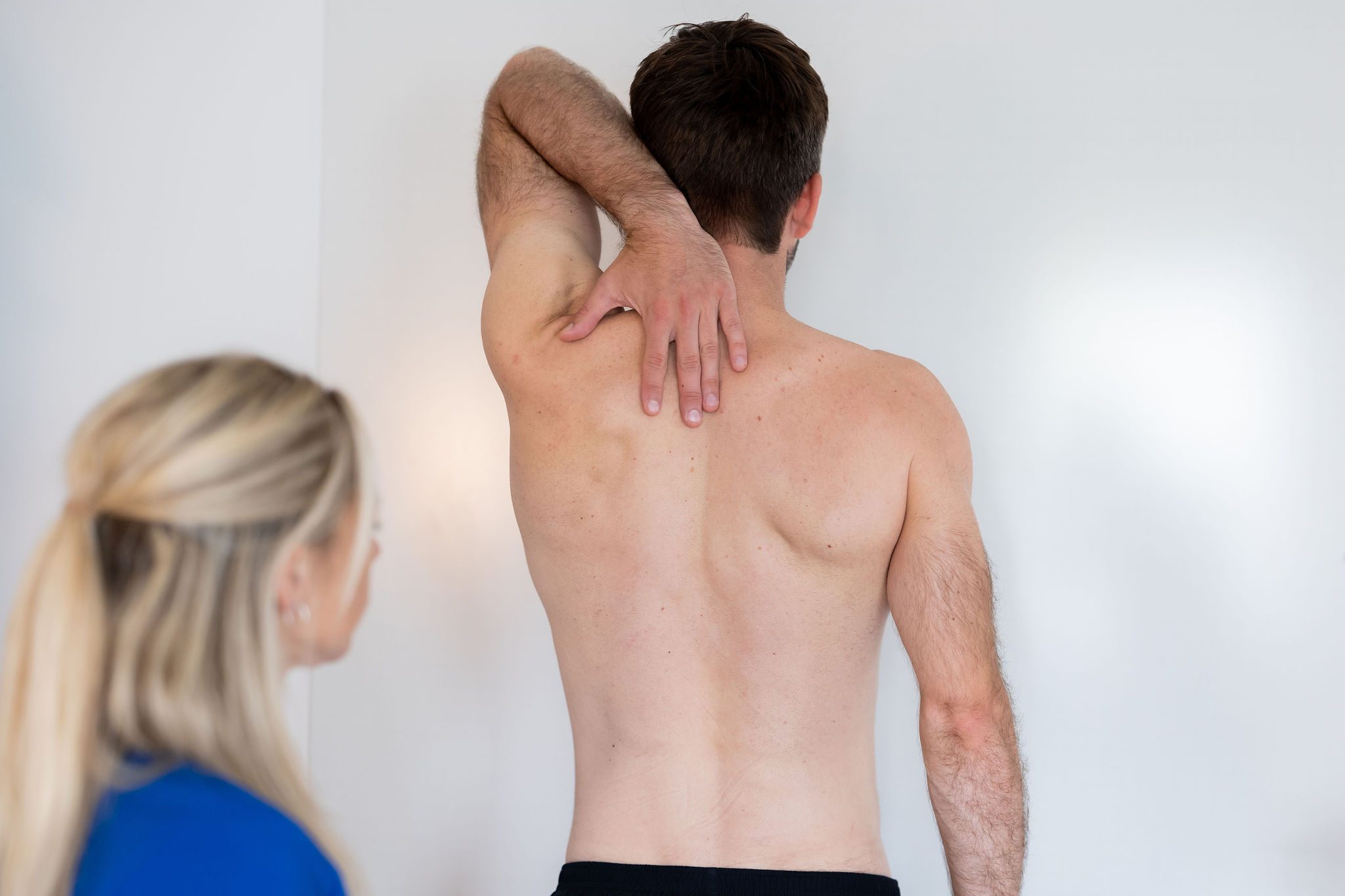
We help with stiff necks and shoulders (including frozen shoulder), backs that have lost their bend, tight hips and hamstrings, and knees and ankles that no longer move freely. The restriction may sit in the muscles, fascia, tendons, ligaments or the joints themselves, and it may follow an injury or operation that healed tight, arthritis or another underlying condition, years of desk work or driving, a spell of illness or inactivity, or simple gradual change over time. Assessment works out where the restriction actually lives and why it is there, and care is then shaped to free it: hands-on treatment, guided movement, and a pace that suits you.
Stiffness usually means tissues have tightened or become protective, not that a joint is worn out. Restriction that built up over time can very often be unwound the same way.
We watch how you actually move and find where the restriction really lives: joint, muscle, or a body that is guarding. The answer is often not where the stiffness is felt.
Range returning a little at a time, movements feeling easier and more trustworthy, and simple habits to keep what you gain. A clear plan, adjusted with you as you improve.
Checking the blind spot without turning your whole body, reaching the top shelf, getting down to the grandchildren on the floor and back up again. Freedom of movement rarely returns all at once, but it does return, one easier movement at a time.
Everything is done with care and at a pace that suits you, and nothing is rushed or forced. The aim throughout is simple: that you feel in good hands, understood, and steadily better.
Stiffness & limited movement is one of the common problems we see; if yours looks a little different, one of these may fit better.
Members and registrants of the Royal Society of Medicine, the Complementary and Natural Healthcare Council, the Institute for Functional Medicine, the Society of Sports Therapists, the Institute of Sport and Remedial Massage and the British Medical Acupuncture Society, among others.
Tell us what is going on, and we will take it from there.